
Why health insurance matters: protect your health and finances

TL;DR:
Medical bills cause most US bankruptcies, even among insured families, highlighting the importance of proper coverage.
Health insurance protects against high costs and provides access to preventive and essential care.
Underinsurance and choosing plans solely by premiums can leave families financially vulnerable to catastrophic health costs.
Medical bills are the leading cause of bankruptcy in the US, and that fact should stop you cold. Not because you’re uninsured, but because many of those families had coverage and still couldn’t keep up. Health insurance is often treated like a checkbox, something you get and forget. But the difference between a plan that truly protects you and one that leaves you exposed can mean the difference between financial stability and financial ruin. This guide breaks down what health insurance actually does, why the details matter more than most people realize, and how to make choices that protect both your health and your money.
Table of Contents
Key Takeaways
Point | Details |
Major financial protection | Health insurance shields you from overwhelming medical bills and reduces bankruptcy risks. |
Essential care access | Coverage ensures you get preventive services and routine care, improving long-term health. |
Avoiding debt and care delays | Uninsured or underinsured families are more likely to face medical debt and skip needed care. |
Supports long-term planning | Continuous, adequate health insurance is vital for your family’s sustained financial stability. |
Choose smart, not just cheap | Not all insurance is equal—understanding plan details is critical to true protection. |
Health insurance as financial protection
Now that we’ve established the impact of overwhelming medical bills, let’s see exactly how health insurance acts as your financial safety net.
At its core, health insurance works by pooling risk across a large group of people. Everyone pays premiums, and that shared pool covers the costs when someone faces a major medical event. Without that pool, a single hospital stay, surgery, or cancer diagnosis can generate bills that most families simply cannot absorb on their own.
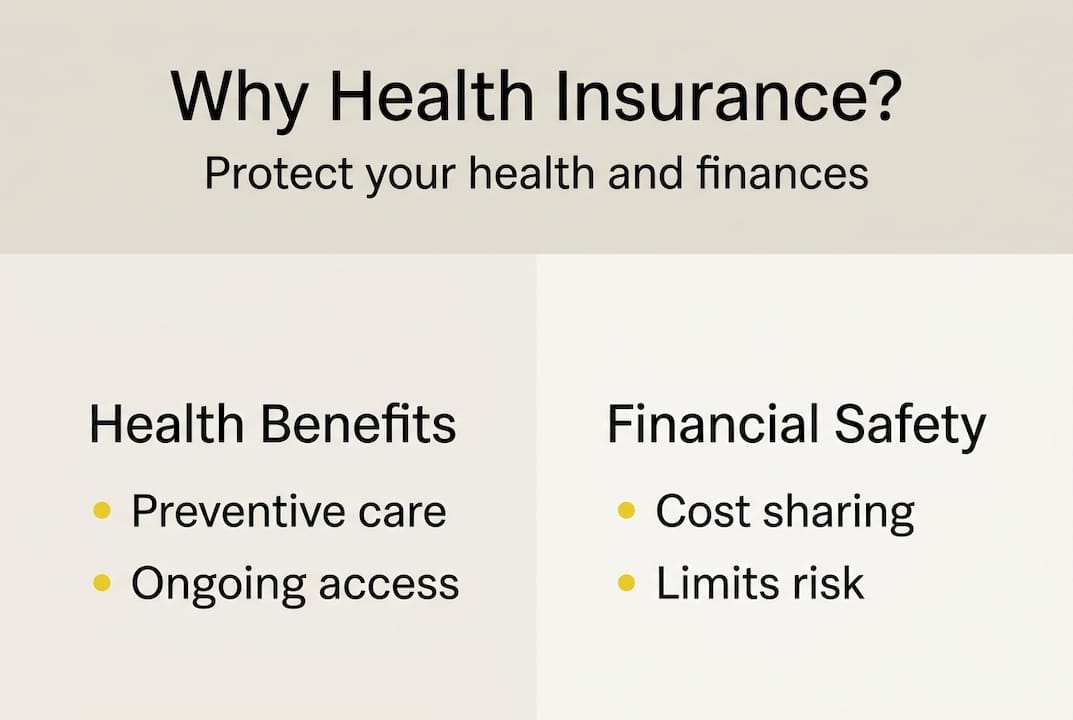
Health insurance protects from high, unexpected medical costs by covering essentials and lowering out-of-pocket expenses. That protection extends beyond the obvious. It includes negotiated rates with providers, which means even your share of the bill is far lower than what an uninsured person would pay for the same service.
Here’s a look at how coverage status connects to financial risk:
Coverage status | Average out-of-pocket risk | Medical bankruptcy risk |
Fully insured | Lower, capped by plan limits | Moderate (some still file) |
Underinsured | High, especially with HDHPs | Elevated |
Uninsured | Extremely high, no negotiated rates | Very high |
The numbers behind this are striking. 530,000 families file medical bankruptcy each year, and most of them had insurance at the time. That tells you something important: having a card in your wallet isn’t the same as having real protection.
Common financial disasters tied to medical costs include:
Emergency room visits averaging over $2,000 before treatment begins
Cancer treatment costs reaching hundreds of thousands of dollars
Chronic condition management that accumulates over years
Surprise billing from out-of-network providers
Understanding the full picture of insurance safeguards helps you see why coverage isn’t just about paying for doctor visits. It’s about protecting everything you’ve built. Reviewing what health insurance covers in detail before you enroll is one of the smartest moves you can make.
According to health care costs data, the average American family spends thousands annually on healthcare, and those costs keep climbing. Insurance doesn’t eliminate that burden, but it makes it manageable and predictable.
“Medical debt is the leading driver of personal bankruptcy in the United States, affecting insured and uninsured Americans alike.”
Access to essential and preventive care
Health insurance doesn’t just protect your wallet. It also connects you to the preventive and ongoing care that keeps you healthy.
Every plan sold through the Marketplace or offered by an employer must cover a set of essential health benefits. These include things like maternity care, mental health services, prescription drugs, and emergency care. Beyond those basics, insurance reduces out-of-pocket costs for in-network services and offers free preventive services with no copay required.
Preventive care is where insurance really earns its keep. Annual physicals, blood pressure checks, cholesterol screenings, mammograms, and colonoscopies are all covered at no cost under most plans. Catching a problem early is almost always cheaper and healthier than treating it after it’s advanced.
Here’s how to get the most out of your preventive benefits:
Confirm which services your plan covers at zero cost before scheduling
Use in-network providers to avoid unexpected charges
Schedule your annual wellness visit every year, even when you feel fine
Ask your doctor about age-appropriate screenings you may be missing
Keep records of what you’ve used so you can plan for the next year
The stakes are real. Nearly half of adults struggle to afford care and may delay it, which leads to worse outcomes and higher costs down the road. That delay is often the difference between a manageable condition and a serious one.
Research on insurance impact on mortality shows that Medicaid expansion reduced low-income adult mortality by 2.5%. That’s not a small number. It means access to coverage literally saves lives.
Exploring your insurance type options helps you find a plan that maximizes preventive benefits for your specific situation. And when you’re ready to enroll, choosing the right insurance starts with understanding what your family actually uses each year.
Pro Tip: Schedule your annual screenings at the start of each year so they don’t get pushed aside. Most are completely free under your plan, and catching something early can save you thousands.
The risks of being uninsured or underinsured
While coverage opens doors, lack of it, or having insufficient coverage, raises serious risks for individuals and families.
Most people think of the uninsured when they picture medical debt. But underinsurance is just as dangerous and far more common than most people realize. A plan with a $7,000 deductible might technically count as coverage, but if you can’t afford to reach that deductible, you’re effectively uninsured for most of your care.
Medical debt prevalence sits at 10.7% among US adults overall, but jumps to 19.5% among the uninsured. That gap is significant, but it doesn’t tell the full story because millions of insured people still carry medical debt.
Here’s how the risk picture changes based on coverage status:
Risk factor | Uninsured | Underinsured | Fully insured |
Medical debt | Very high | High | Moderate |
Deferred care | Very common | Common | Less common |
Emergency room overuse | High | Moderate | Lower |
Long-term health outcomes | Poor | Mixed | Better |
The effects of being uninsured or underinsured show up in real, measurable ways:
Skipping necessary prescriptions because of cost
Delaying treatment until a condition becomes an emergency
Avoiding specialist referrals due to out-of-pocket costs
Higher rates of preventable hospitalizations
HDHPs cause care postponement, emergency visits, and worse outcomes for many patients. The appeal of lower premiums is real, but the tradeoff can be severe if your family uses healthcare regularly.
“New Medicaid enrollees saw a 21% reduction in mortality, showing that meaningful coverage saves lives.”
Understanding the difference between group vs individual plans can help you find coverage that actually protects you, not just coverage that technically exists. The care affordability challenges facing American families make it more important than ever to choose carefully.
Health insurance and long-term financial well-being
Beyond the immediate, choosing and maintaining adequate health insurance can support lifelong financial health.

Health insurance isn’t a standalone decision. It’s part of your broader financial picture, sitting alongside your savings, retirement accounts, and life insurance. A gap in coverage at the wrong time can drain savings, delay retirement, or force you to take on debt that follows you for years.
The ACA increased coverage by more than 20 million people, reducing uninsured rates to all-time lows. That expansion showed what’s possible when coverage becomes accessible, and it underscores how much financial stability depends on staying covered.
Here’s how to weave health insurance into your long-term financial plan:
Budget for premiums, deductibles, and out-of-pocket maximums as fixed annual costs
Build a health savings account (HSA) if your plan qualifies, to cover future medical expenses tax-free
Review your plan every open enrollment period as your family’s health needs shift
Factor in coverage gaps when planning for early retirement or career changes
Coordinate health coverage with comparing insurance policies for retirement to avoid surprises
Gaps in coverage can quietly undermine everything else. A major illness without proper coverage can wipe out years of savings in months. That’s why financial planning services often include health coverage review as part of retirement planning.
Pairing health insurance with life insurance options creates a more complete safety net for your family. Together, they address both the cost of living with illness and the financial impact of unexpected death.
Pro Tip: Review your health insurance every year during open enrollment, not just when something changes. Your family’s needs evolve, and the plan that worked two years ago may leave you exposed today.
Our take: What most people overlook when thinking about health insurance
With so much information available, it’s easy to focus on simply having insurance. But let’s talk about what actually works for most families.
The biggest mistake we see isn’t being uninsured. It’s being falsely insured. A plan with a $6,000 deductible and a $12,000 family out-of-pocket maximum sounds like coverage, but for a family earning $55,000 a year, that’s a financial catastrophe waiting to happen. Critics like Mark Cuban argue that HDHPs with unaffordable deductibles offer false security, and in many cases, they’re right.
The uncomfortable truth is that a plan’s premium is the least important number on the page. What matters is your total risk exposure: the maximum you could owe in a bad year. If that number would financially devastate your family, the plan isn’t actually protecting you.
A real safety net means coverage aligned with your actual health needs and financial reality. That might mean paying a higher premium for lower cost-sharing. It might mean exploring health insurance types you haven’t considered before.
Pro Tip: Before enrolling in any plan, calculate your worst-case annual cost: premium times 12, plus the out-of-pocket maximum. If that number would break your budget, keep looking.
Get help making smart health insurance choices
Ready to put your family’s financial and health security first?
Navigating health insurance on your own is genuinely hard. Plans vary widely, terms are confusing, and the wrong choice can cost you far more than you saved on premiums. At Strawderman Financial, we help individuals and families find health insurance options that actually fit their lives, not just their budget line.

Our advisors take the time to understand your family’s health needs, financial situation, and long-term goals before recommending anything. We also connect coverage decisions to your bigger picture, including life and health guidance that protects your family from multiple angles. When you’re ready to stop guessing and start planning, speak with an insurance advisor who will walk you through your options at no cost.
Frequently asked questions
What happens if I don’t have health insurance in 2026?
Without coverage, you face significant financial risk from medical bills, and medical debt prevalence is nearly double among uninsured adults compared to the general population. Skipping care due to cost also leads to worse health outcomes over time.
How does health insurance help with preventive care?
Most plans cover free preventive services like annual exams, screenings, and vaccinations at no cost to you, helping you catch problems before they become expensive emergencies.
Are high-deductible health plans a good choice for families?
HDHPs can cause care postponement and worse outcomes, especially for families who use healthcare regularly. Lower premiums can be appealing, but the total risk exposure may outweigh the savings.
How has the Affordable Care Act changed health insurance?
The ACA expanded coverage to more than 20 million additional Americans through Medicaid expansion and Marketplace plans, bringing uninsured rates to historic lows and making coverage more accessible across income levels.
Recommended


Comments